Trauma in Art & Practice
Collection of artworks, images and exhibitions photos related to transsomatic trauma
Somatic Memory of Historical Violence
Transgenerational Epigenetics of Trauma - the Shoah, Antisemitism, and Racism

STREAM
This is a collection of artistic works, impressions, images, and quotations on the theme of the transgenerational transmission of trauma and the body’s memory of violence. These are materials by other creators who have made their impressions and images available to us.
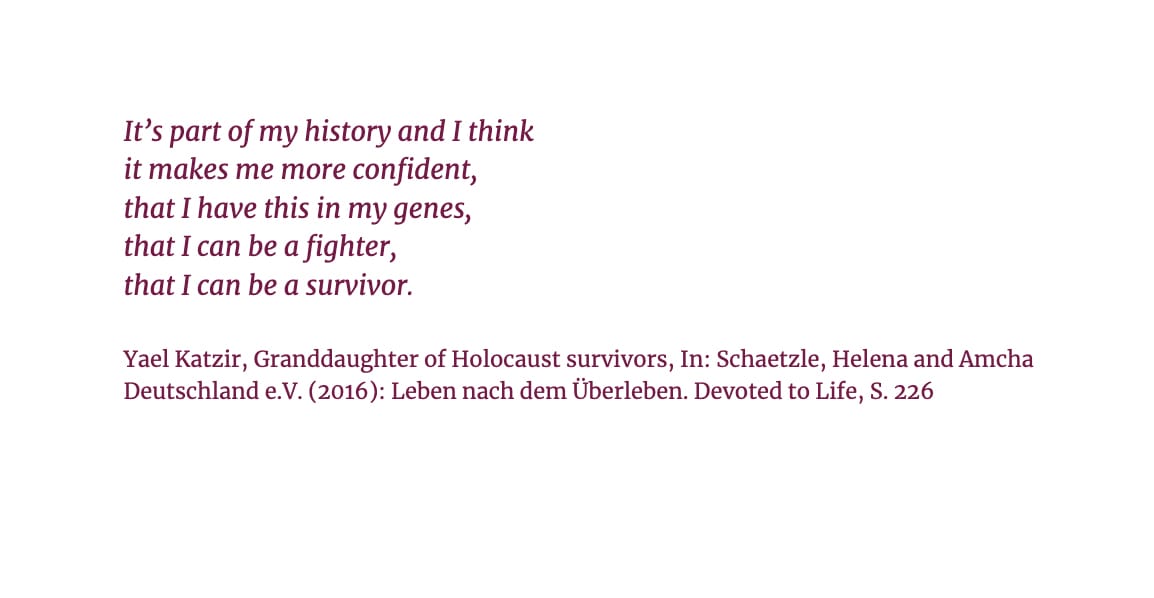
Quoted from the book “Devoted to Life” about the lives of Holocaust survivors and their families in Israel, book by Helena Schätzle und Amcha Deutschland e.V.
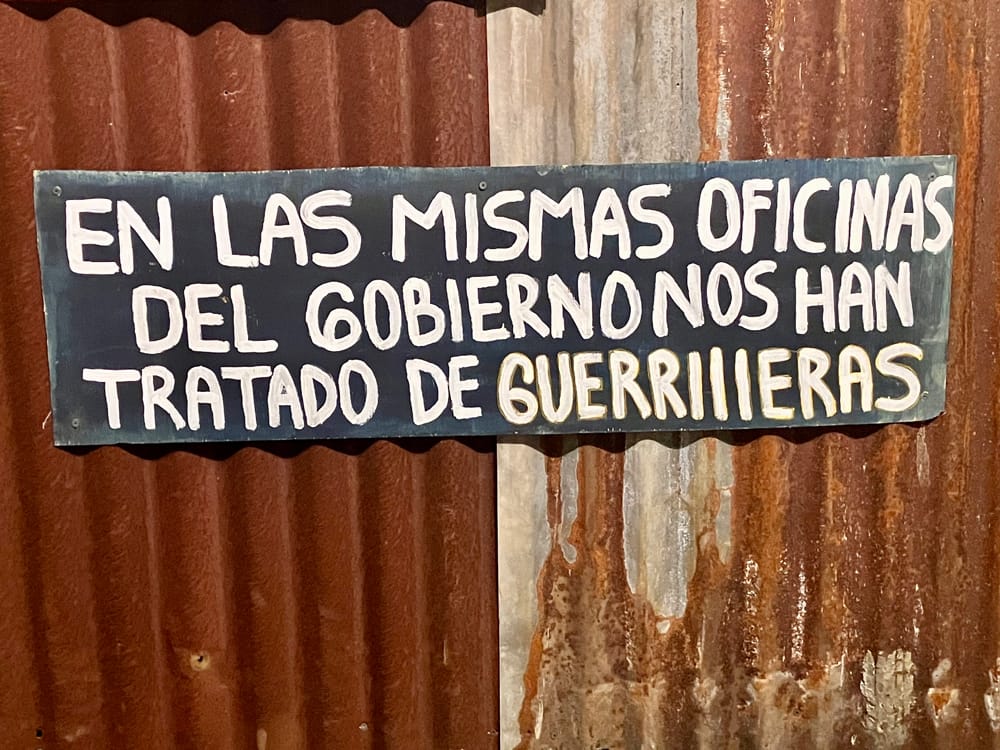
“In those very same government offices, we were treated like guerrillos (underground fighters).” In Colombia’s armed conflicts, the poor rural population – caught in the crossfire of the fight against the guerrilla – has for decades suffered (and continues to suffer) murder, sexual assault and displacement – a never-ending vicious circle of violence and fresh trauma. This vicious circle was broken for the first time in 2016 by the peace agreement between the government and the guerrilla. The Museo Casa de la Memoria (House of Memory) addresses historical crimes and, in doing so, supports the country’s complex peace process. LINK
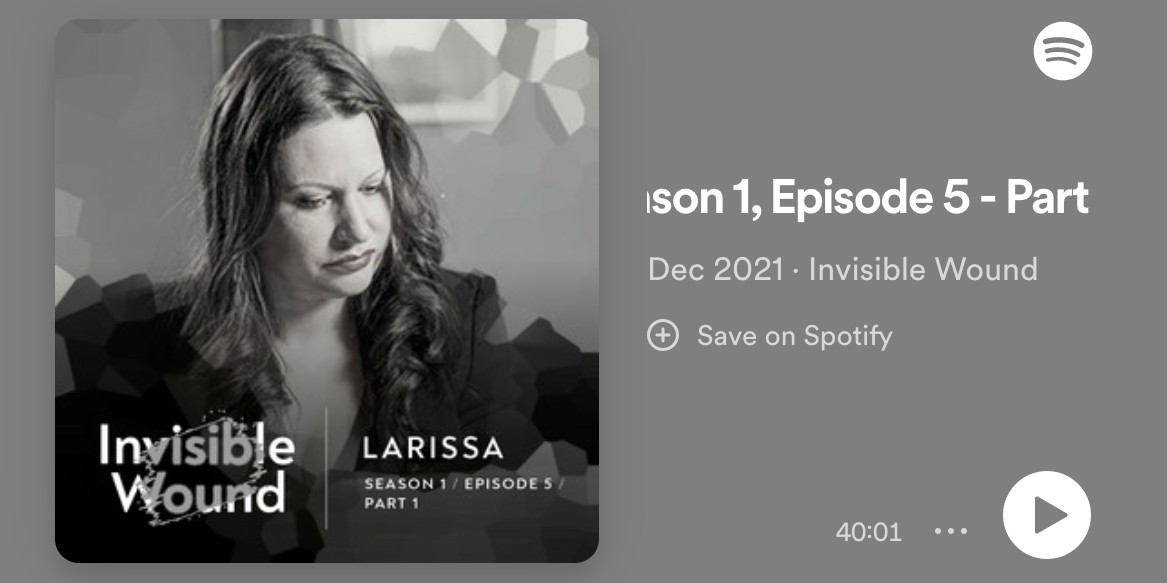
invisiblewound5
The Podcast “Invisible Wound” von Sharon Ryba-Kahn is part of the project “Hakara – facing transgenerational trauma” by AMCHA Germany. In Episode 5 we meet Larissa Behrendt. We discuss her work as a lawyer, and her novel „After Story“. Through her works we will discover her approach to fighting injustice and how making characters complex enough enables you to show them from their most vulnerable sides as well as the documentary film „After the Apology“ and the topic of the Stolen Generations as well as her approach of narrating trauma and the importance of empowerment in her work.

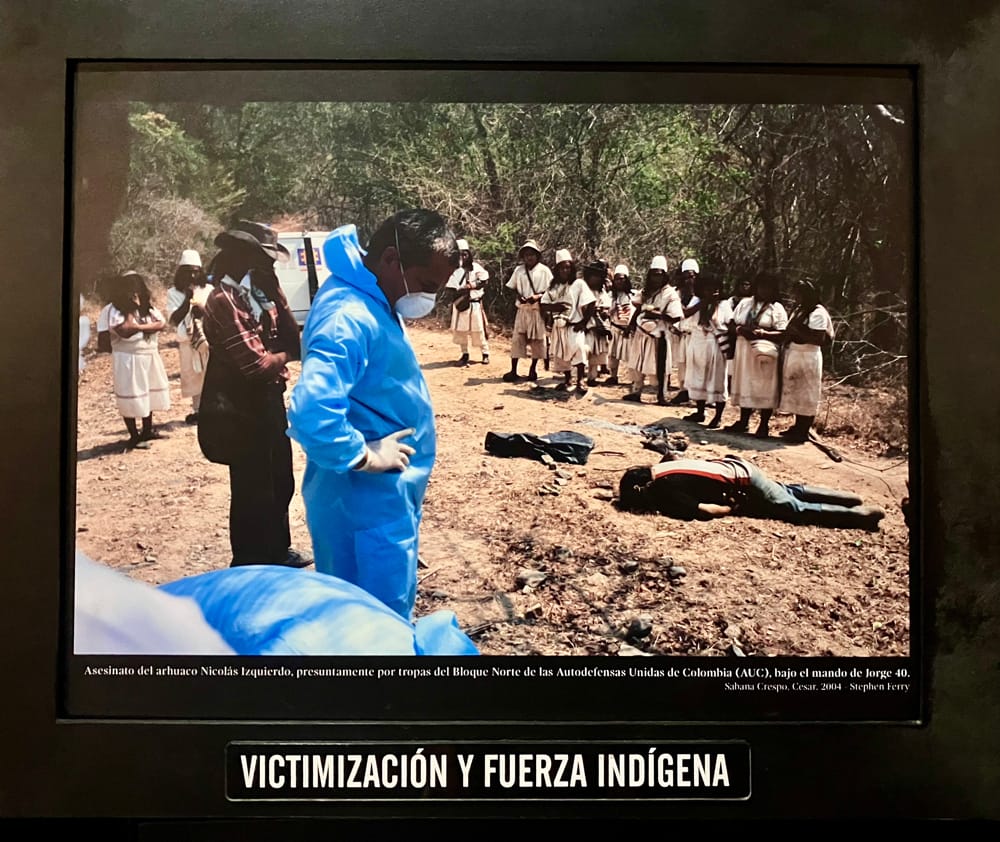
“Becoming a victim and indigenous power”. Pictured here is a person believed to have been murdered by paramilitaries, in front of units of the Indigenous Forces. A world that accepts only extremes is black and white. Not least, it is also the photographers who risk their lives so that the country can experience first-hand the suffering of the victims, the horrors and the intertwined roles of the various actors in this war. Through their language – photography – they tell us what really happened and what many would prefer to ignore. Photographs are passed down from one generation to the next. Exhibition at the Museo Casa de la Memoria (House of Memory) in Medellín, Colombia, 2023. LINK
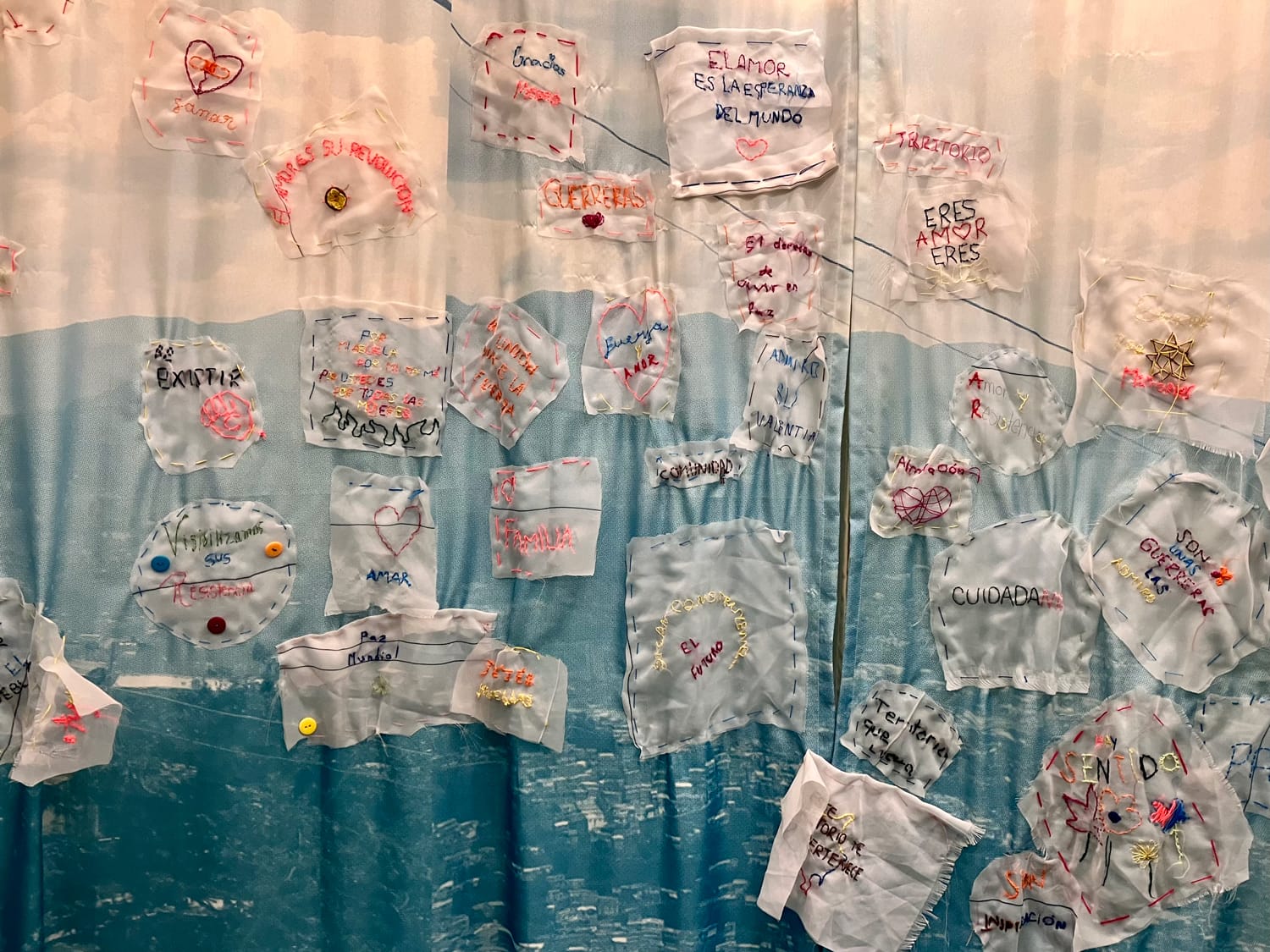
To examine violence, we need different languages with which to tell the story. Every art form, technique and artistic expression has depicted violence in its own way. More than just a document, art reflects, takes sides, condemns and illustrates the complexity of pain and war. Art speaks when words are not enough. It moves through the realms of emotion, challenges ideas and words, subverts logic and shatters archetypes. – The Museo Casa de la Memoria (House of Memory) shows how art grapples with violence and trauma in Colombia. LINK
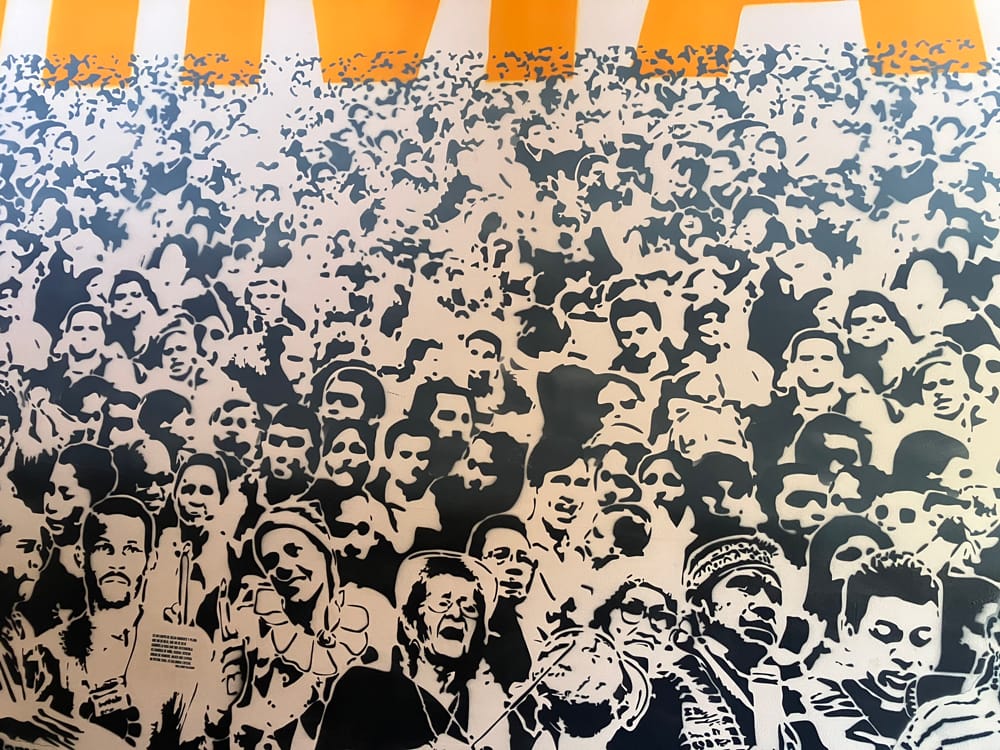
The testimonies recount various events, each of which forms part of a long history of suffering that, to this day, awaits to be heard, supported and healed. The Museo Casa de la Memoria (House of Memory) in Medellín, Colombia, gives a face and a voice to those affected by violence and displacement. LINK
invisiblewound2
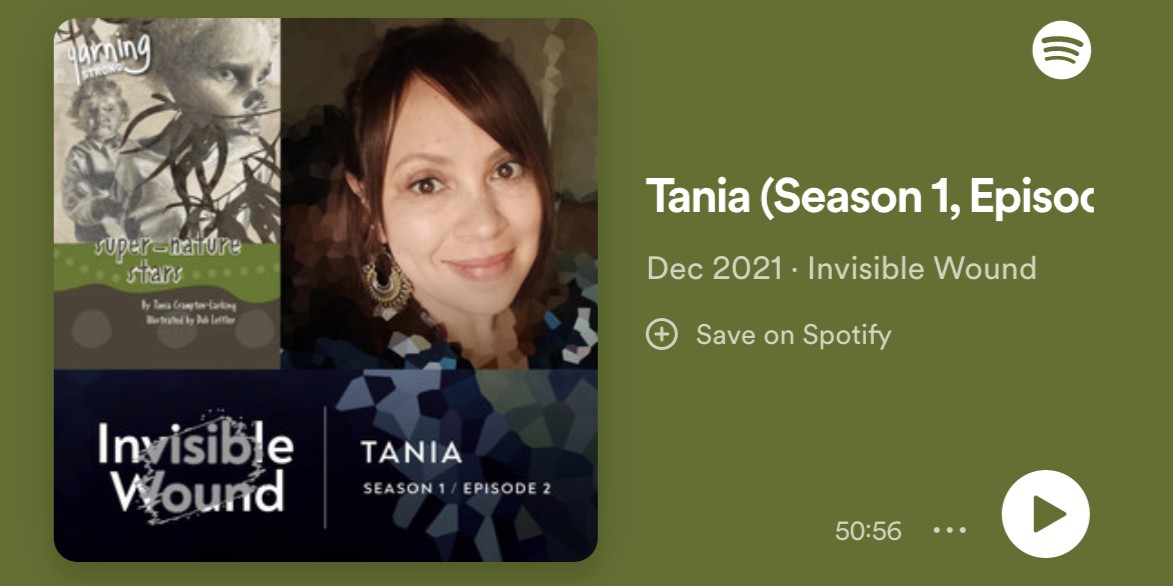
Tania Crampton-Larking about the importance and beauty of nature in her life and in her writing: Her own traumatic experiences as an Aboriginal woman have been very painful, but she has never given up. The Podcast “Invisible Wound” von Sharon Ryba-Kahn is part of the project “Hakara – facing transgenerational trauma” by AMCHA Germany.

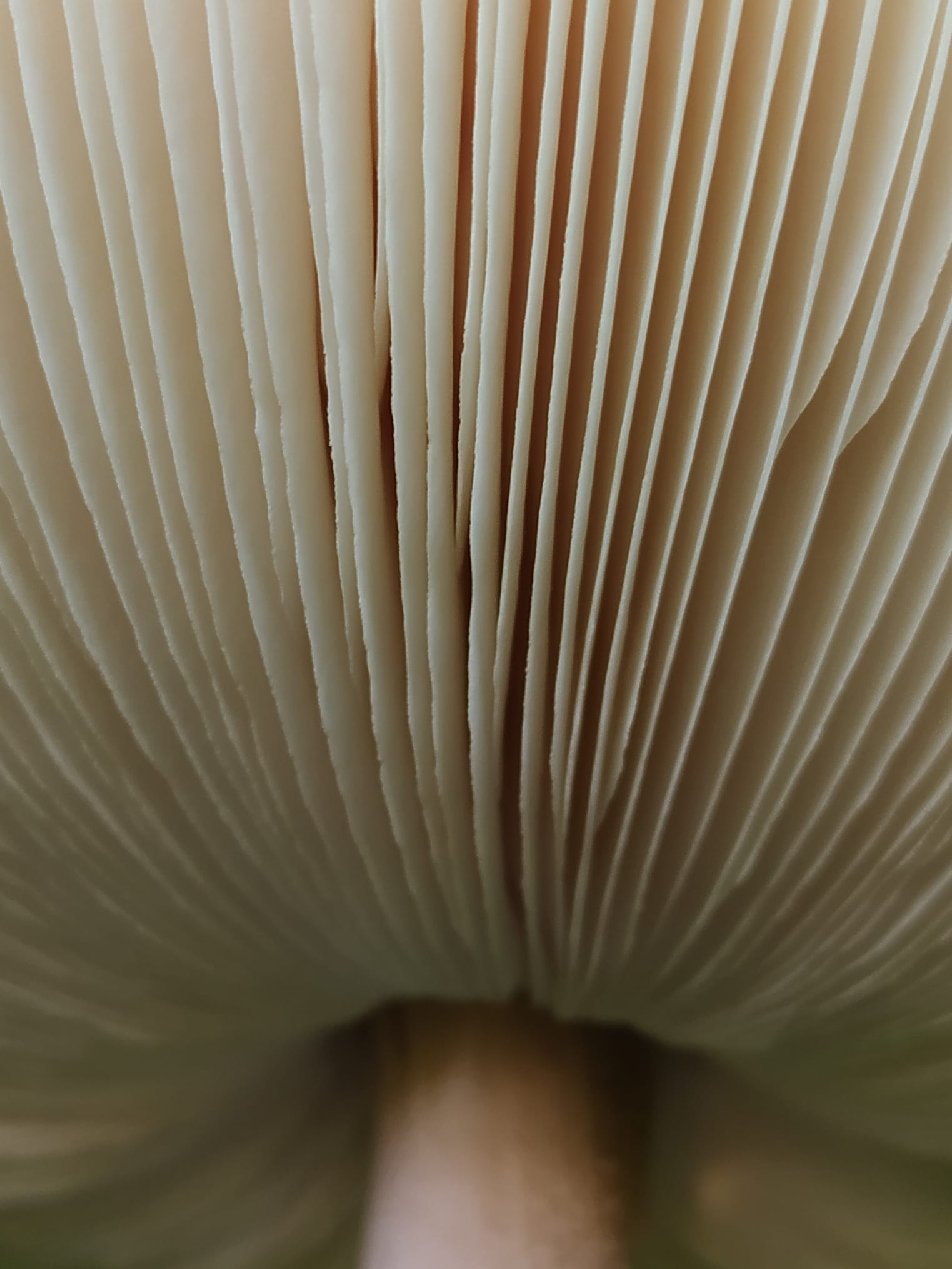
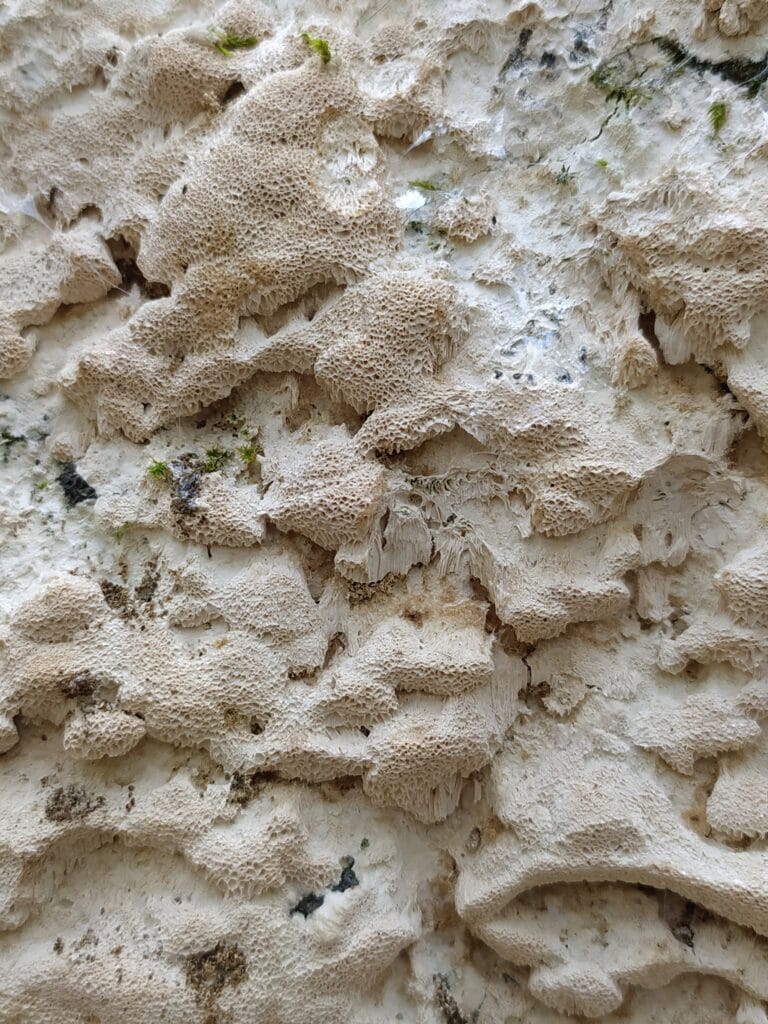
Can we see ourselves reflected in surfaces, structures and textures? Dorothee Krings (Berlin) has been, and continues to be, a photographer, amongst many other things. In recent years, she has organised private ‘trauma salons’, where participants could share personal perspectives on their own histories, their wounds and how they cope with them. For her, macro photography is an imaging technique that visually reveals what seems impossible: the deeper layers of time. Her images speak of the fragility of our world and, by extension, of our own vulnerability.
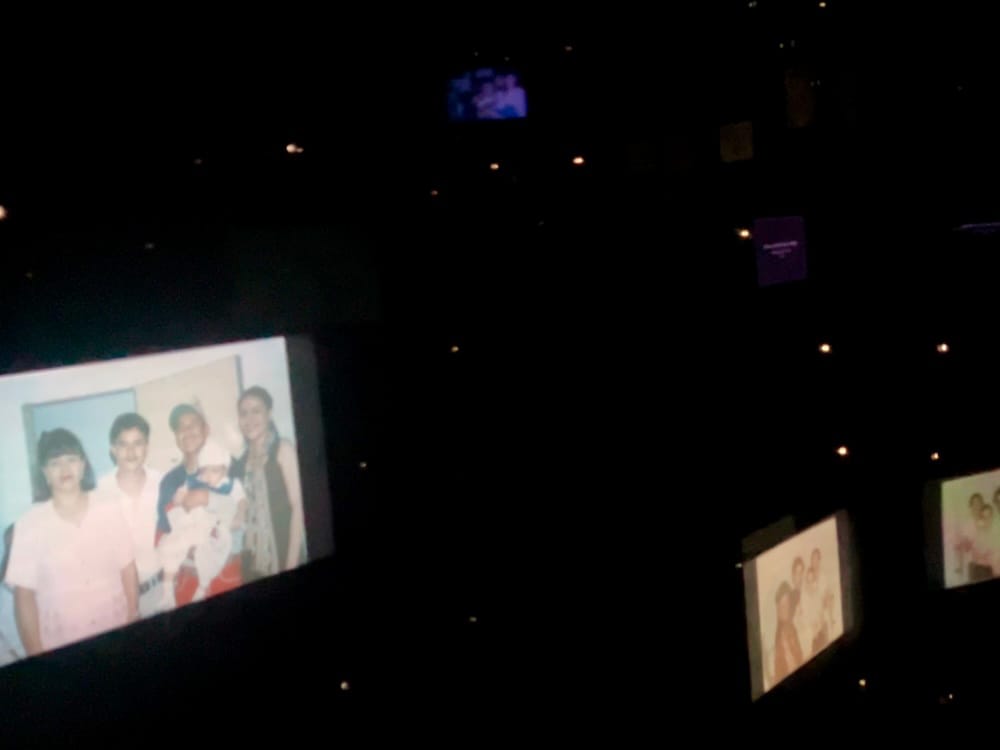
The videos on display at the Museo Casa de la Memoria (House of Memory) in Medellín, Colombia, focus on five key words that reflect the conflict in Colombia: FEAR, SOLIDARITY, RESILIENCE, MEMORY, DIFFERENCE. Each word transports us into an everyday situation, into something familiar and recognisable, enabling us to analyse it from the perspective of war, from the viewpoint of its protagonists and in terms of its impact on the reality in which we live. Museo Casa de la Memoria in Medellín/COL 2023. LINK
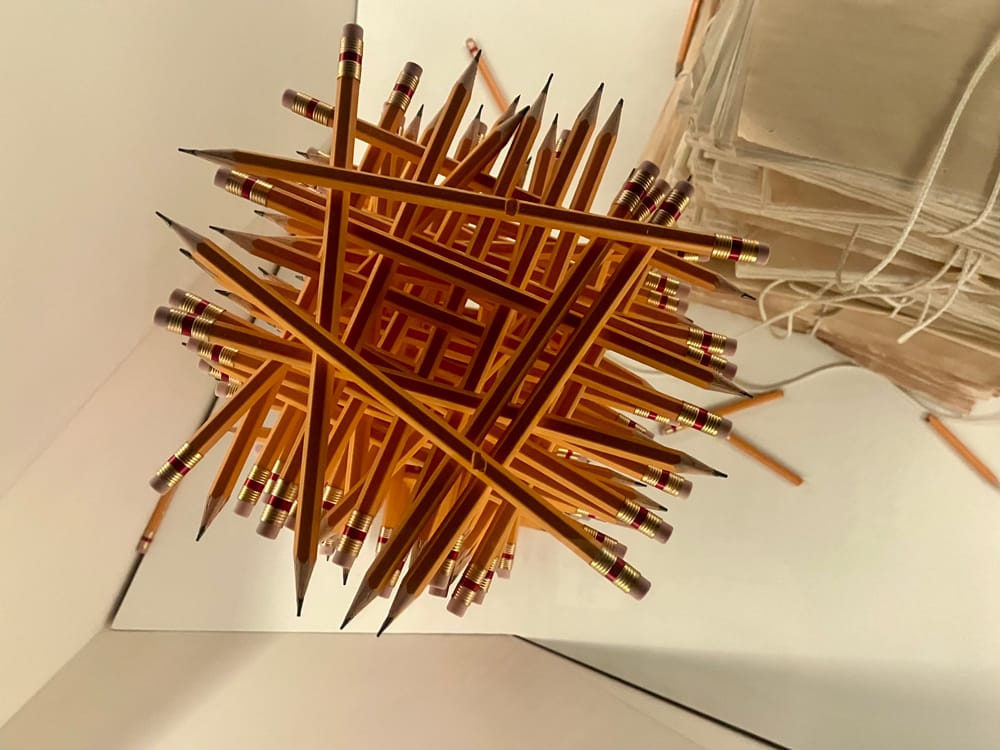
How can one express absence and pain? – Between 1991 and 2012, 900 teachers were murdered in Colombia (source: Human Rights Observatory. Mario Novelli. War in the Classrooms. Political Violence against Trade Unions in the Education Sector in Colombia 2009). According to estimates, 91 students were murdered between 1954 and 2011 as part of the repression of the country’s student movements. – Exhibition at the Museo Casa de la Memoria (House of Memory) in Medellín, Colombia, 2023. LINK
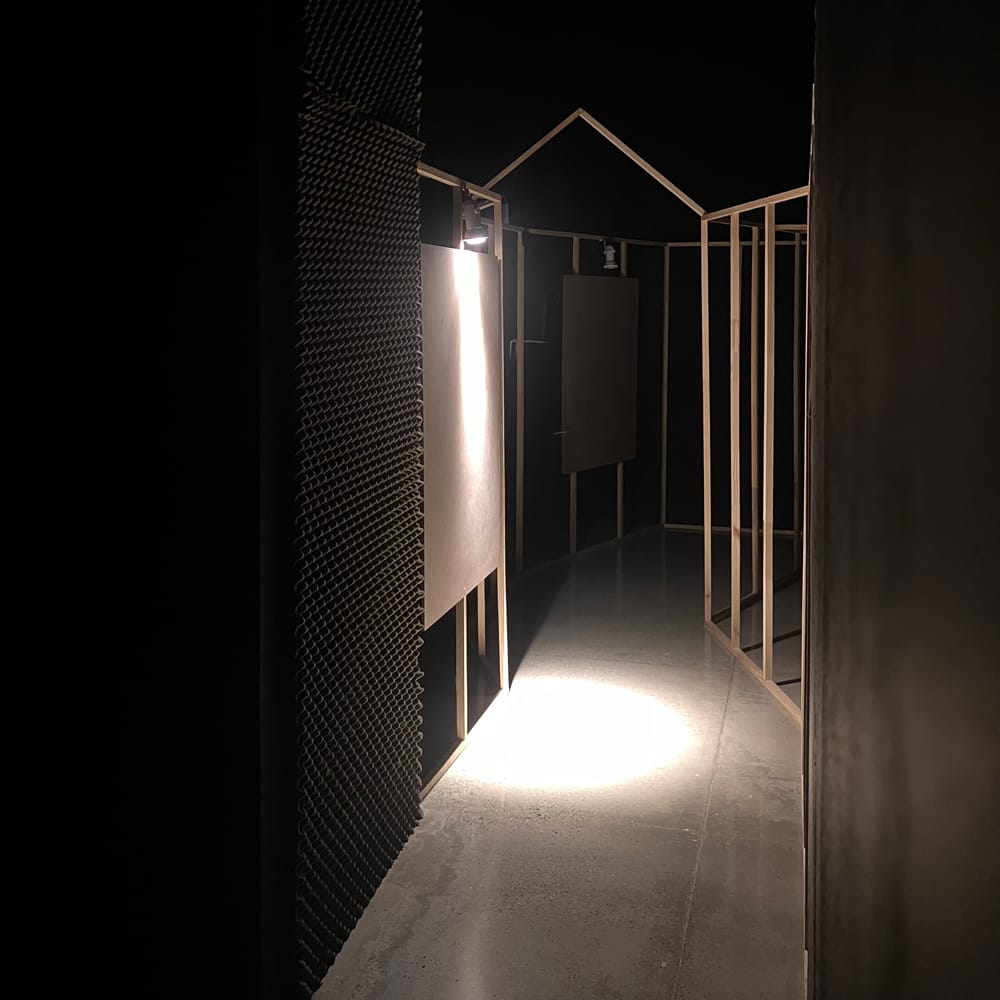
Whispers. – Stories that make you scream. Many traumatic war experiences remain hidden. Many victims are scarred by deep horrors that are just as painful as the indifference and enforced silence that go hand in hand with fear and impunity. LINK
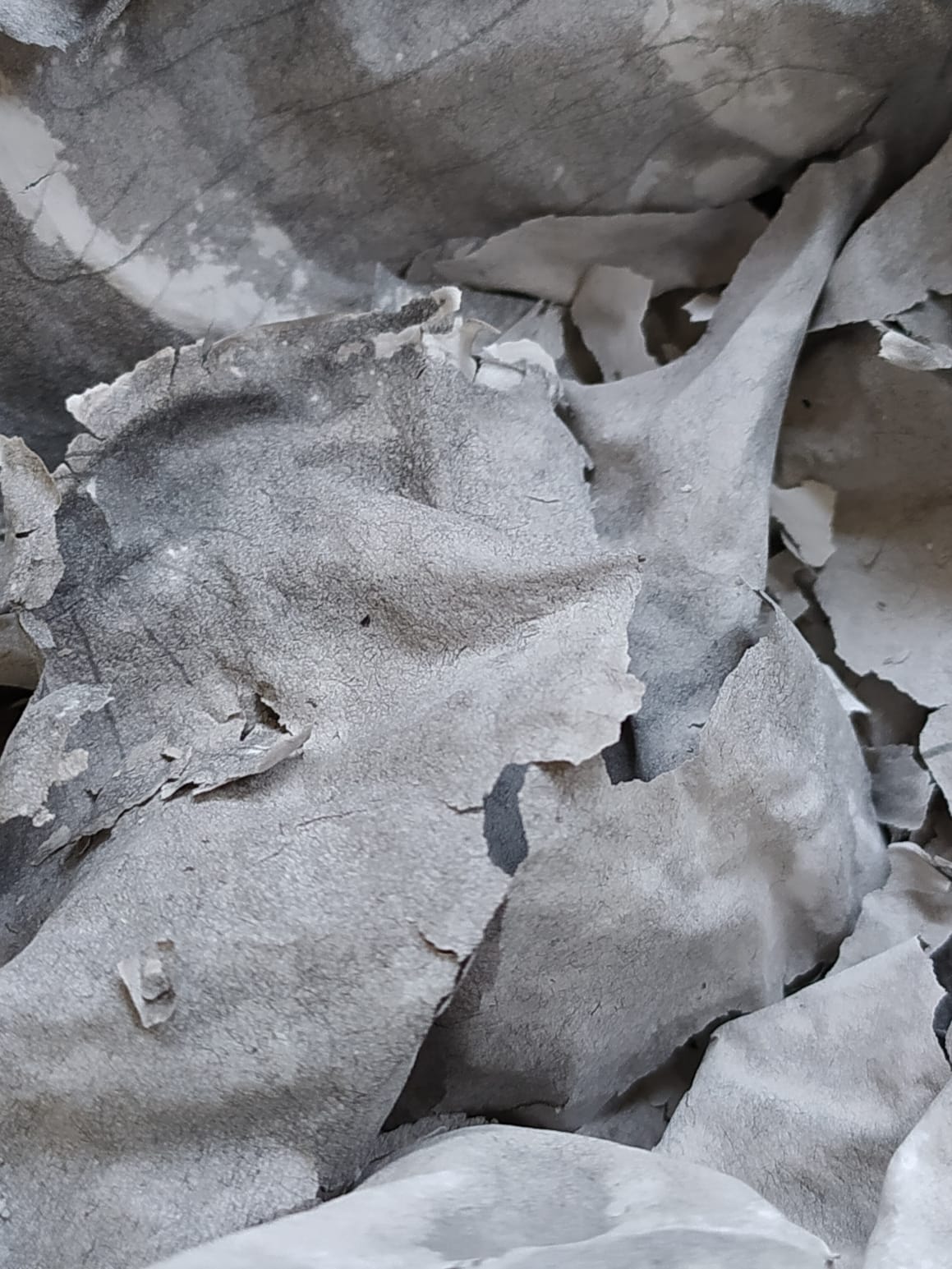
Can we see ourselves reflected in surfaces, structures and textures? Dorothee Krings (Berlin) has been, and continues to be, a photographer, amongst many other things. In recent years, she has organised private ‘trauma salons’, where participants could share personal perspectives on their own histories, their wounds and how they cope with them. For her, macro photography is an imaging technique that visually reveals what seems impossible: the deeper layers of time. Her images speak of the fragility of our world and, by extension, of our own vulnerability.
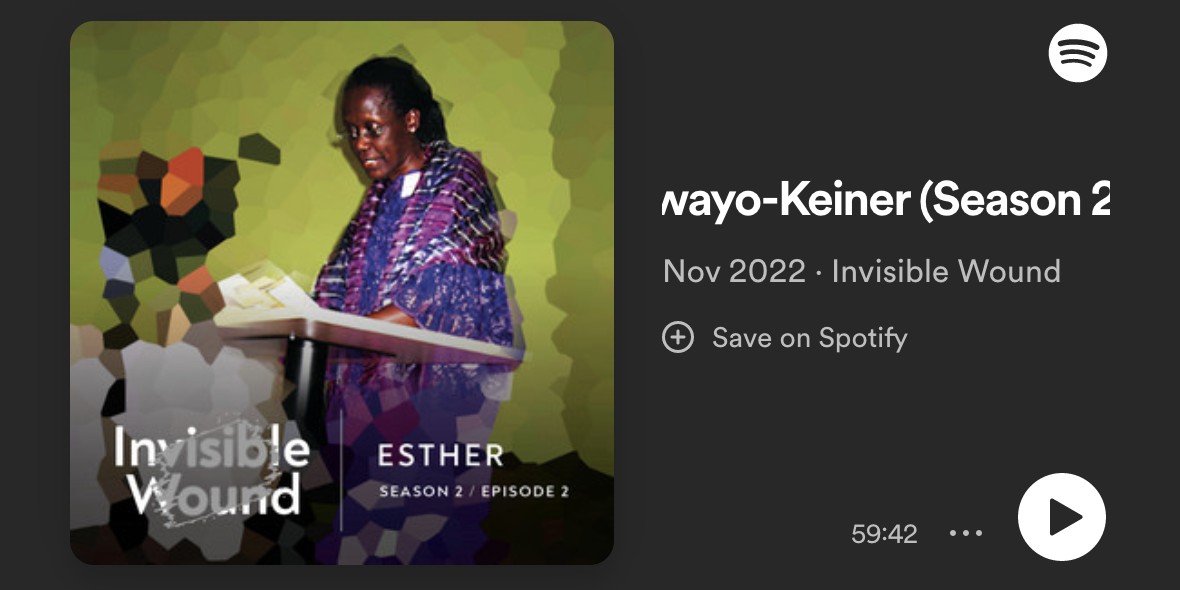
invisiblewound7
Esther is a psychotherapist and author from Rwanda who works with refugees in Germany. She is also a survivor of the 1994 genocide, where over one million Tutsi were murdered by Hutus. She speaks from two perspectives, as a trauma expert and as a survivor: beyond the meaning and impact of collective and transgenerational trauma. Esther talks about the meaning of good and evil in each of us and in the context of her life and what healing from such massive trauma entails. She shares experiences with us from her personal and professional life.
The widows association AVEGA AGAHOZO Book by Esther Mujawayo (in german and french)

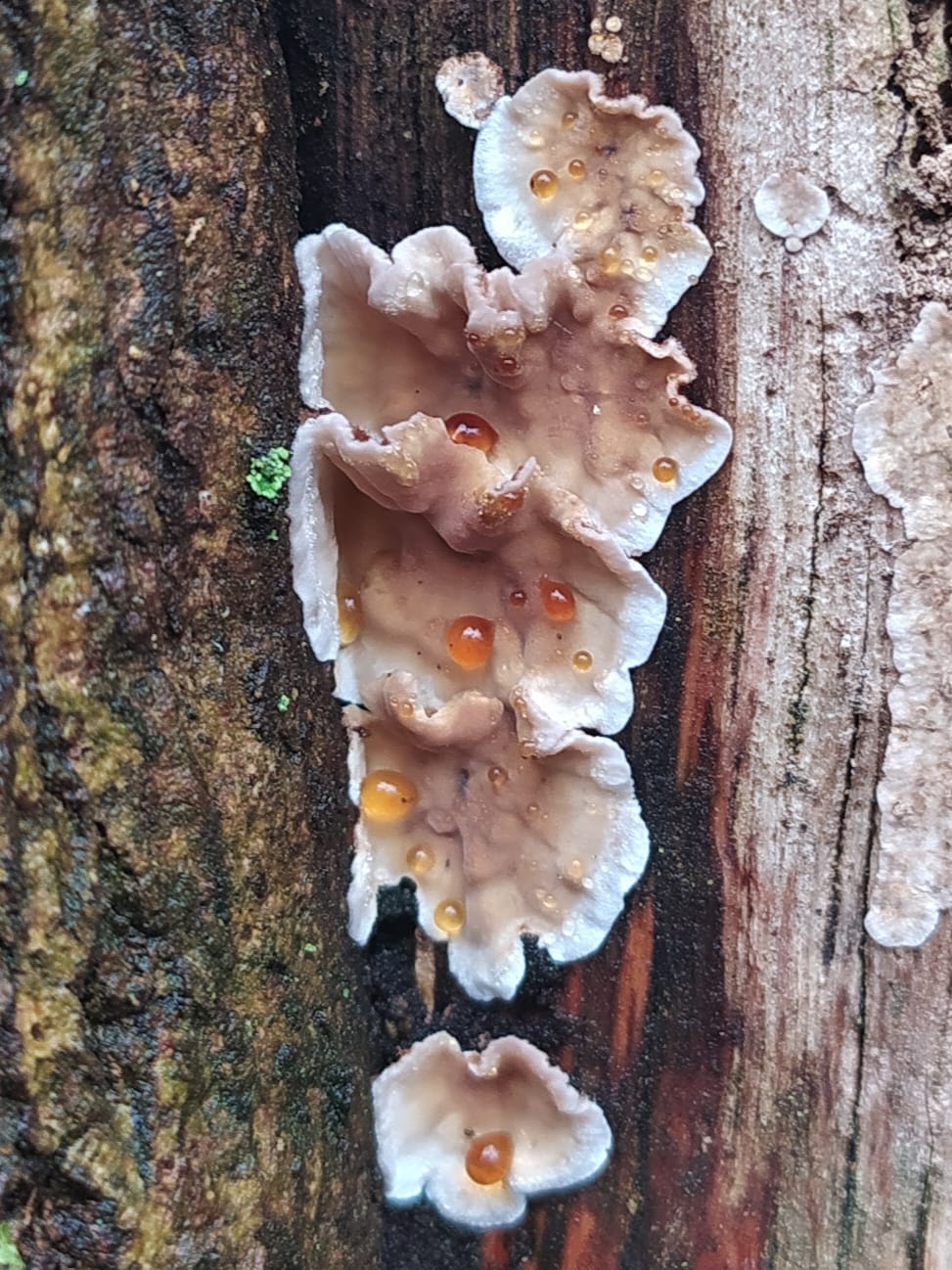
Can we see ourselves reflected in surfaces, structures and textures? Dorothee Krings (Berlin) has been, and continues to be, a photographer, amongst many other things. In recent years, she has organised private ‘trauma salons’, where participants could share personal perspectives on their own histories, their wounds and how they cope with them. For her, macro photography is an imaging technique that visually reveals what seems impossible: the deeper layers of time. Her images speak of the fragility of our world and, by extension, of our own vulnerability.
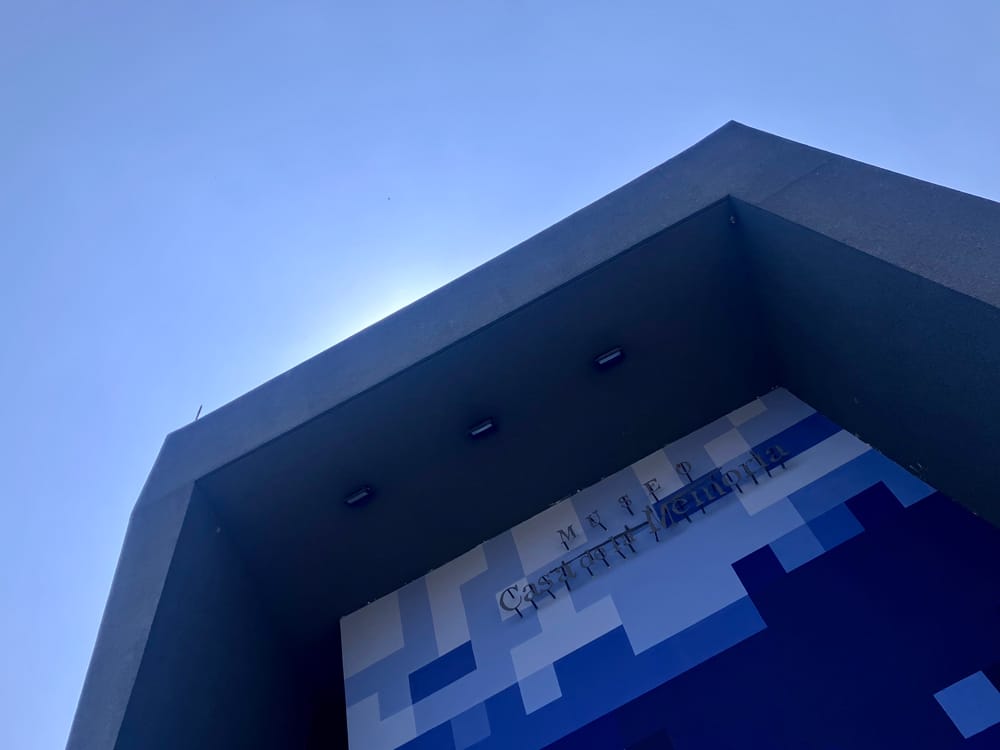
Memories of violence and resistance – The Museo Casa de la Memoria (House of Memory) in Medellín/COL has existed since 2011 and is the first museum in the country to focus on the victims and perpetrators of decades of armed conflict, civil wars and drug gang wars. One focus is on the participation of the descendants and their trauma and memories. LINK
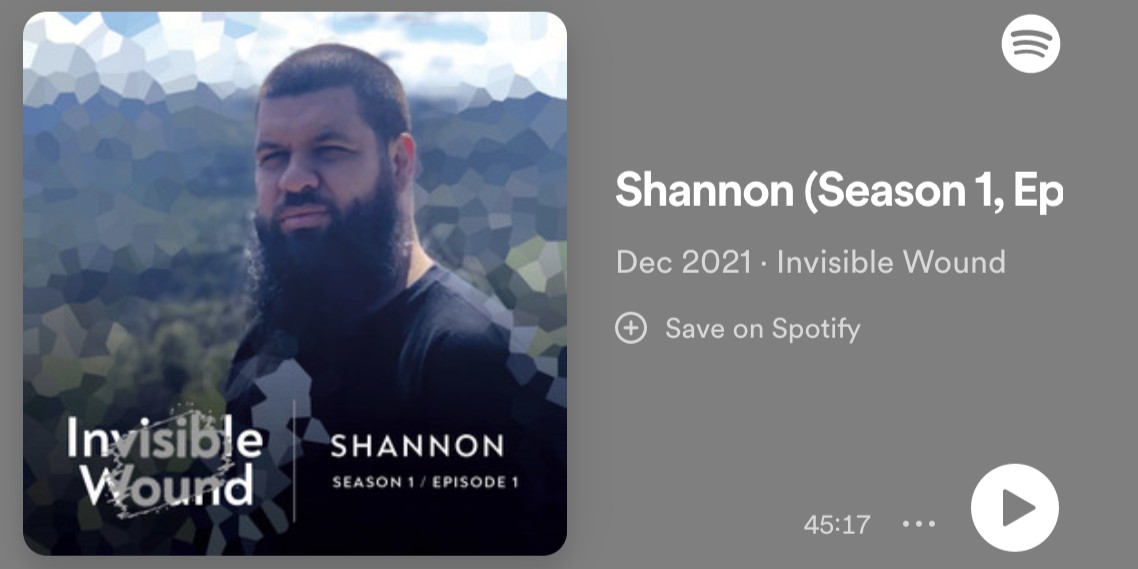
invisiblewounds1
Shannon discusses his understanding of trauma through his life and his work with Aboriginal kids, and in his work as an Aboriginal artist. He is amazing at improvising, and you will discover what this means in the episode. The Podcast “Invisible Wound” of Sharon Ryba-Kahn is part of the project “Hakara – facing transgenerational trauma” by AMCHA Germany.

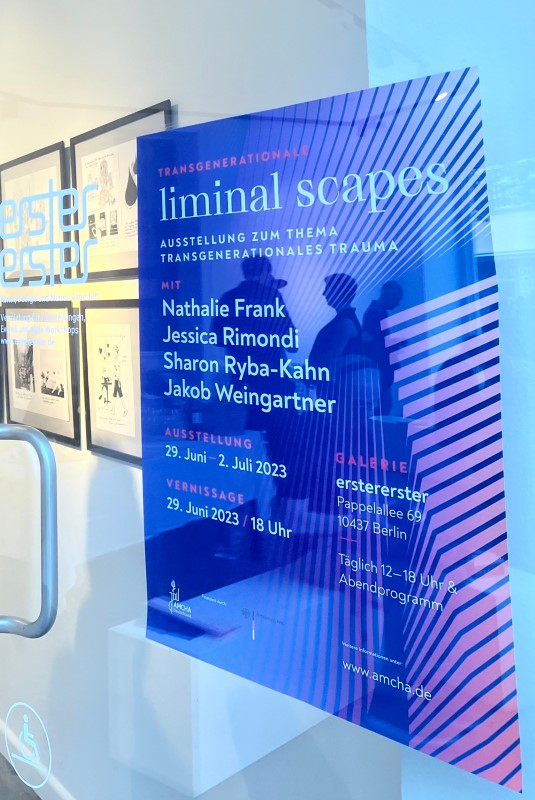
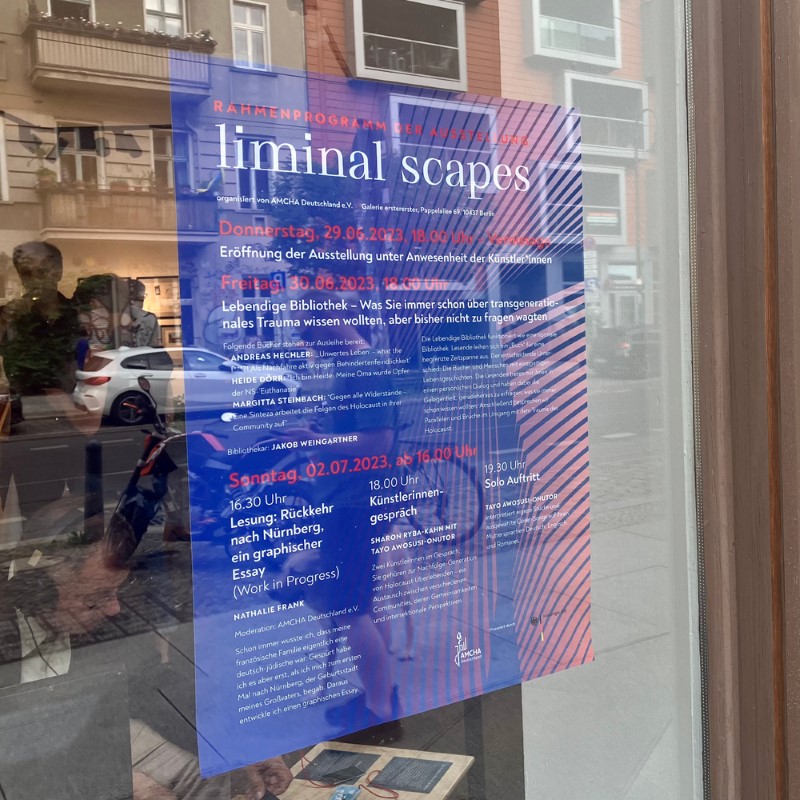
View of the exhibition “liminal scapes”, which dealt with transgenerational trauma from an artistic point of view. Berlin in summer 2023.
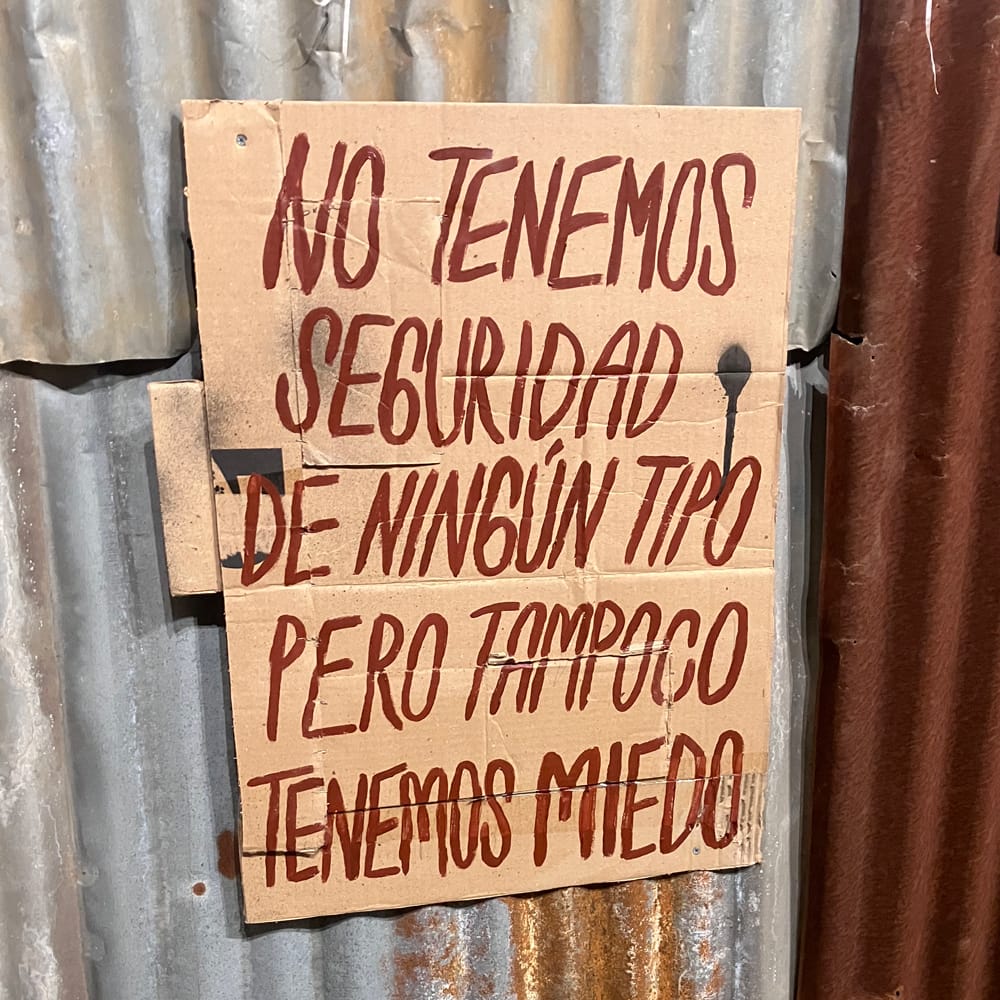
“We have no security whatsoever, but we are not afraid either” – words. A key to reflecting on war and violence: they give us the opportunity to analyse war, its protagonists and what we have experienced. To understand complex concepts, we draw on metaphors.
Display case in the permanent exhibition at the Museo Casa de la Memoria (House of Memory) in Medellín, Colombia, 2023. kennen, erzählen uns so viele Geschichten. Museo Casa de la Memoria (Haus der Erinnerung) in Medellín/COL 2023. LINK
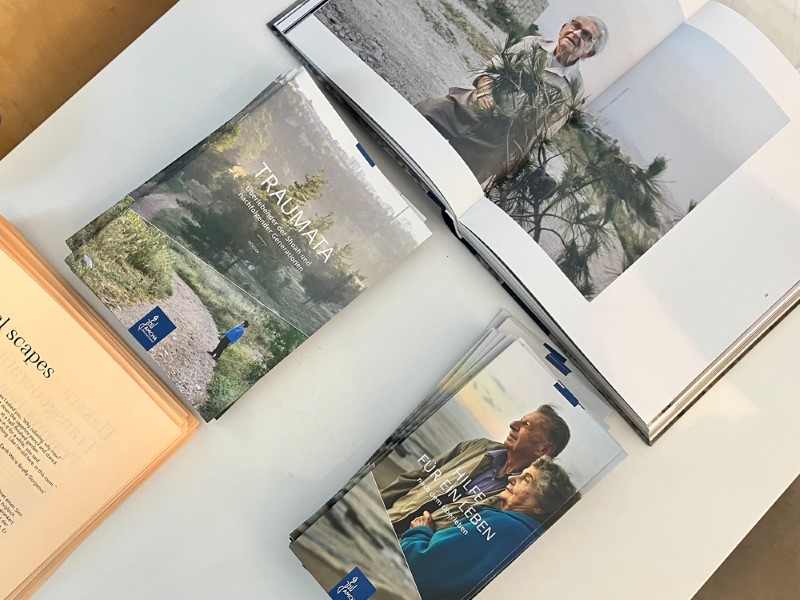
Information material for people affected by traumatic experiences and their relatives from Amcha e.V. Germany
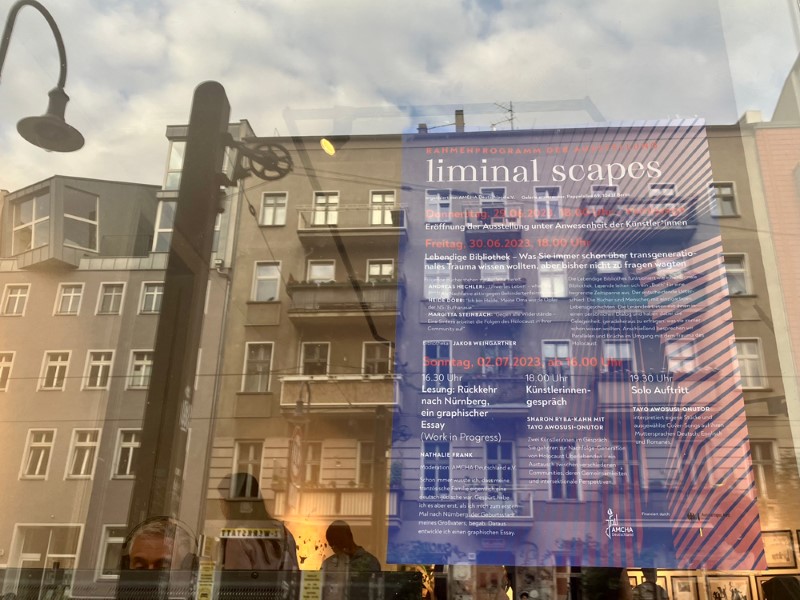
Poster of the exhibition “liminal scapes”, which dealt with transgenerational trauma from an artistic point of view. Berlin in summer 2023.
All image content is shown here for educational purposes according to the fair use principle. If we have inadvertently infringed any image rights, please write to us (contact details in the legal notice) and we will remove the content immediately. Unless otherwise stated: Photos by F. Springer.